Research Focus
We work on the development and application of computational approaches to understand molecular biological systems based on complex experimental data. We pursue this objective using a combination of direct mathematical modeling, machine learning, and statistical / bioinformatics data analysis methods, in close collaboration with specialized experimental collaboration partners.
Biological applications include
- Viral infection and immune response, in particular for HIV, Dengue and Hepatitis C virus, where we use a combination of mathematical modeling, machine learning and high-throughput screening techniques to decipher virus-host interactions and develop new antiviral strategies.
- Ageing and age-related diseases, where based on deep sequencing and other high-throughput data we study regulatory processes underlying cellular ageing.
- Cancer and oncogenic transformations in cells, for example mathematical modeling of cellular pathways involved in increased proliferation of cancerous cells.>li>
- understanding the regulatory role of microRNAs in secretory trafficking, using machine learning and mathematical modeling based on large-scale image based RNAi screening data.
Research in these biological applications is complemented by the development of novel bioinformatics and biostatistics tools to process complex experimental data. For example, we have developed a pipeline for the automated processing of large-scale, image based RNAi screens. We develop and employ supervised and unsupervised maching learning tools for Bioinformatics and Systems Biology, which we employ for example to predict survival and treatment response of cancer patients based on molecular data, or to reconstruct genetic regulatory and signal transduction networks from high-throughput experimental data.
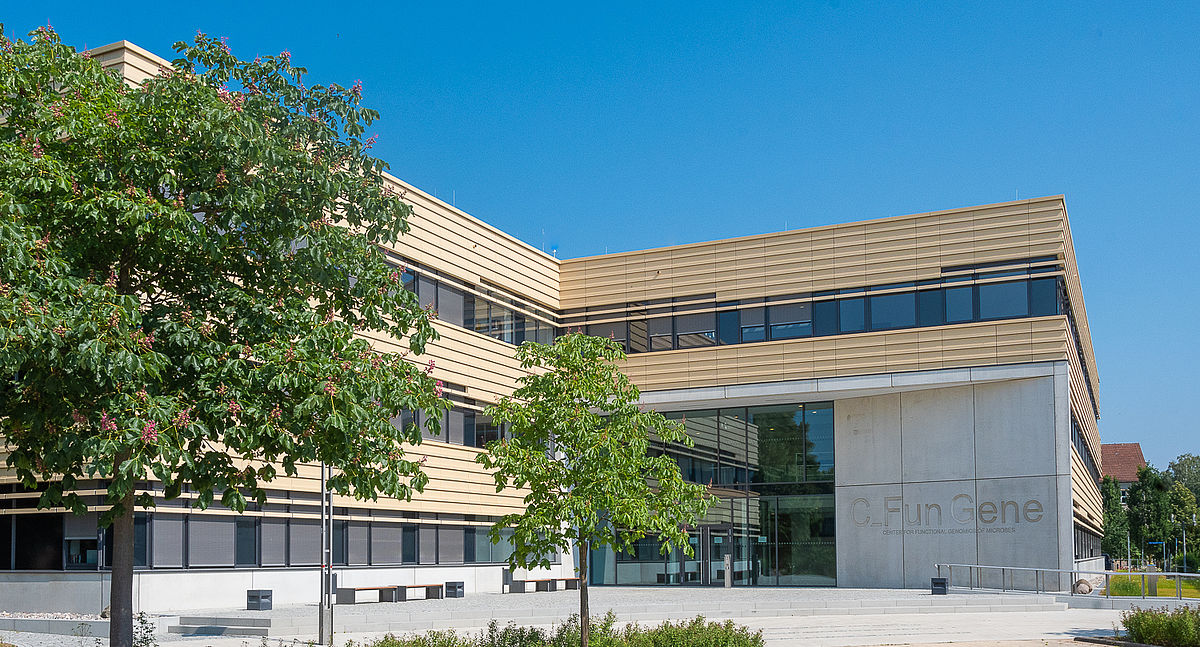
Our group is located on the medical campus of the University of Technology Dresden, one of Germany's leading research campuses in the life sciences area. The building is located on the Biotechnology Campus, situated in the beautiful valley of the river Elbe, and next to the DFG Research Center and Cluster of Excellence - CRTD, the Max-Planck-Institute for Molecular Cell Biology and Genetics, the TU Dresden Faculty of Medicine Carl Gustav Carus, and the Dresden International Graduate School for Biomedicine and Bioengineering. We are part of a growing community of Computational and Systems Biology research groups in Dresden, see http://www.compbio-dresden.de.